
 Printer-friendly version

 By Alexander J Schorr
Councilmember Gary Kendrick addresses crowd in El Cajon
February 8, 2026 (El Cajon) — An El Cajon Council meeting has once again set the stage for heightened tensions between the public and elected officials over the federal government’s crackdown on immigrants the violence committed by Immigration Customs Enforcement (ICE).
At a rally outside before last Tuesday’s meeting, Councilmember Gary Kendrick denounced the killings in Minneapolis of two U.S. citizens, Renee Good and Alex Pretti, by ICE and Border Patrol agents. El Cajon residents protested outside Council Chambers and continued to voice outrage. He also noted that the state of California won a court challenge filed against SB 54 by the Trump administration.
The law governs how local police departments can interact with Immigration and Customs Enforcement (ICE). “I believe we need to follow the law,” said Kendrick. “Only two out of the 482 cities in the state have passed a resolution like this,” he said, referring to El Cajon’s resolution calling for closer cooperation between the city’s police and ICE.
Kendrick, the longest-serving city councilmember in San Diego County, spoke during public comments to condemn the fear and chaos instigated by the Trump administration, stated: “I think we need to love each other, not hate each other, and there's a group of people that’s filled with hate and it absolutely disgusts me.”
He told ECM, “Injustice really upsets me. We could be on the same path as Germany in 1933.”
Data from the Deportation Data Project indicates that in 2025, ICE arrests have increased in the El Cajon area, with a higher percentage of those arrested not having criminal convictions compared to previous years.
Kendrick Helps The Rallies Against ICE
Kendrick has been a vocal critic of increased local cooperation with federal immigration authorities: he opposed El Cajon’s 2025 resolution to assist Immigration and Customs Enforcement (ICE) and participated in protests against the city’s policy, with concerns over the impact of federal raids on the local community.
Kendrick’s position aligns with broader local debates over the extent to which city resources should be used for federal immigration enforcement actions. Kendrick previously voted against a city resolution aimed at increasing cooperation with immigration enforcement, standing against El Cajon Mayor Bill Wells and other council members.
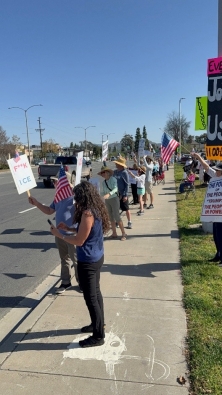 Dozens of protestors filled the El Cajon City Council meeting from Tuesday the 27th, who demanded that the city rescind its policy of cooperating with federal authorities, including the sharing of license plate reader data which residents say is being used in deportation efforts.
Before the meeting at 6:00, the demonstration against Mayor Well’s stance on ICE began as a rally outside the council chambers, with around 165 people participating.
What California Law Says
The dispute has escalated to the state level, with Attorney General Rob Bonta ordering the city to stop sharing license plate data with federal agencies.
California’s primary legislation prohibiting collaboration with ICE is Senate Bill 54, also known as the California Values Act. The law restricts state and local resources from being used for federal immigration enforcement to ensure public safety institutions remain accessible to all residents regardless of status.
Under the act, California police and sheriffs generally cannot:
- Ask about immigration or citizenship status.
- Arrest or detain someone based solely on a civil immigration warrant or deportation order.
- Provide ICE with personal information, such as home or work addresses, unless it is already public record.
- Allow local officers to be supervised by federal agencies or deputized for immigration enforcement.
- Use ICE agents as interpreters or translators during local law enforcement investigations.
Under the Act, Police and Sheriffs may:
- Notify ICE of a person’s release date or transfer them to federal custody if they have been convicted of specific serious or violent felonies, such as those crimes punishable by imprisonment in state prison.
- Permit transfers if ICE presents a judicial warrant or a probable cause determination signed by a judge.
- Permit local agencies to participate in joint task forces with federal agents as long as the primary purpose is not immigration enforcement.
There have been multiple measures to tighten loop holes and short commings with the policy: AB 1537 / AB 1627: Proposed measures to prohibit local officers from “moonlighting” by taking secondary jobs with federal immigration agencies. Job Bans: Legislation has been proposed to disqualify individuals who have worked for ICE during certain federal administrations from future employment as teachers or police officers in California.
El Cajon Mayor Bill Wells has pushed back against claims that the city’s cooperation with ICE is terrorizing the community: “My question would be, ‘How? Who is terrorizing anybody?’ We are not stopping anybody for immigration. We are not asking anybody about their immigration status. In fact, ICE isn’t really in El Cajon. We’ve had almost no incidents of ICE being here.”
In March 2025, a high-profile ICE raid occurred at San Diego Powder & Protective Coatings near El Cajon, the first major immigration raid in San Diego County following the 2025 presidential inauguration. Approximately 26 people were arrested: there were four individuals faced federal charges, with the HR manager having to forfeit $230,000. Witnesses reported that workers were zip-tied and detained for hours during the investigation.
There were also operations by Homeland Security Investigations (HSI) and ICE which were reportedly in the unincorporated areas of El Cajon, specifically near Gillespie Field. Resident activists have reported that ICE has increasingly targeted local apartment complexes and businesses throughout the city, leading to community-wide fear. Additionally, local council members have highlighted recent arrests occurring directly in residential neighborhoods, including an incident where a father was detained in front of his child at his home in late January 2026.
Additionally, Alexander Kraft, who is running for the position of mayor of El Cajon against Bill Wells, said that the city should not help ICE “kidnap my neighbors.”
“I’m proud to be from El Cajon,” Kraft said. “I’m proud to be from a working-class community. I’m proud that my community welcomes immigrants and refugees. You know what I’m not proud of? I’m not proud of El Cajon elected officials,” Kraft added. If elected, Kraft said the first thing he is going to do is repeal El Cajon’s resolution on immigration enforcement.
Leadership under Mayor Bill Wells has declared that El Cajon is “not a sanctuary city.” Since January of 2026, residents and organizations like Latinos en Acción have been actively protesting to repeal the pro-ICE resolution established by Wells, and have launched recall campaigns against local officials.
A court hearing is scheduled for February 13th to determine whether El Cajon must stop sharing license plate data with federal agencies.








Comments
el cajon