When KUSI entered the market in 1982, its owner was Dan McKinnon, a Reagan appointee who ran the Civil Aeronautics Board at the president’s request. The station made no bones about it, it was Republican, it was conservative.
Now 43 years later the station is a major player in the crowded San Diego broadcast news market. In 2023 Fox5 and KUSI were purchased by Nexstar, whose CEO, Perry Sook, is a supporter of conservative causes. They are part of the 197 television stations owned by Nexstar across the United States.
When Rupert Murdoch’s Fox News, with its conservative, opinion-based product passed CNN in viewership in the early 2000s, the thinking was there is an audience at the local level if they followed the Fox game plan.
Adding to the changing dynamics in the broadcast market, the internet offering of multiple platforms, social media and later streaming led to a steep drop in television news viewership. This seriously weakened the bottom line for local television stations, offering opportunities for deep-pocketed investors.
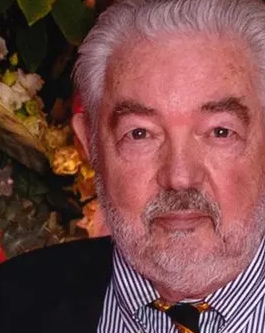 One of them, Sinclair’s David Smith, was helped immensely when the Republican-led FCC increased the number of television stations a company could own in a local market. Sinclair gobbled up television groups and individual stations across the country, stations affiliated with all major broadcast networks, including ABC, NBC, CBS, and Fox. The company’s website says they own or operate 185 stations in 85 markets. Smith believes that owning these many stations creates economies of scale and allows the industry to compete with online news platforms.
Now Sinclair is making a very serious run to enter the San Diego market. The company is eyeballing 10News, an ABC affiliate and its owner, E.W. Scripps. Its offer values the company at approximately $622 million, according to Reuters. See Sinclair website here.
Scripps was itself trying to buy a 15-station chain when Sinclair made an unsolicited hostile bid for the entire company, which owns, among other properties, 60 stations in 40 markets. Scripps, like other broadcast groups, was trying to survive by expanding, buying up other chains weakened by declining revenues.
In a memo sent in late November to 10News employees , Adam Symson, the President and CEO of Scripps, explained the Scripps board put in place a “legal mechanism” that “helps ensure that Sinclair, or anyone else interested in buying Scripps, must first negotiate with the board.” He added, “Our audiences, customers and communities will be expecting the same high level of service we’ve always given them.”
In talking to former Sinclair employees in other markets, I have heard a number of complaints about the company’s controversial “must carry” policy where Sinclair produces and distributes segments to its stations featuring conservative perspectives. The local stations must run the opinion pieces in their local newscasts. The Committee to Protect Journalists and other organizations say the corporate-mandated opinion pieces don’t have clear labeling and create the impression it’s the work of a viewer’s local news station. It’s been called an “illusion of local trust.”
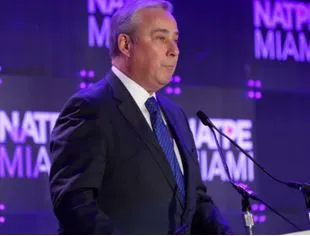 Nexstar media will be THE major player in San Diego by late 2026. It will assume full control over KFMB/ CBS8, and “The CW San Diego,” which become part of the media empire that already includes KUSI and Fox5.
Sook’s political donations are made to both parties in Congress; however, the Republicans receive significantly larger amounts than the Democrats, according to Open Secrets.
Sook was criticized recently when Nexstar (and also Sinclair) suspended Jimmy Kimmel Live! after the comedian made comments about the late conservative activist Charlie Kirk. Sook supports Trump’s policies, particularly deregulation efforts. Nexstar believes the opportunity to buy still more stations allows it to become more competitive “with Big Tech and Big Media.” It’s an ironic statement given Nexstar is the largest local television network owner in the United States.
“We believe that there is value to be created for our shareholders through further consolidation, while driving true and new benefits to the American people who want and deserve fact-based unbiased local news,” said Sook.
The most conservative news casts in this market can been seen on One America News Network (OAN). Based in San Diego it is politically to the right of Fox News. Trump is their most famous viewer, it’s one of the president’s pre-approved channels. As far back as 2016 OAN tried to curry favor with Trump, carrying his rallies in full. Their relationship flowered in 2020, when the cable station’s owner Robert Herring strongly supported Trump’s theory that hydroxychloroquine was a cure for coronavirus. On an OAN broadcast Herring said it had “proven to be miraculous” as reported by Columbia Journalism Review. Russian state television rebroadcast some of OANN’s coverage debunking “the impeachment hoax”.
There is still another market dynamic now unfolding, an issue being ping ponged in court over changing other FCC guidelines. Currently an owner can only own one out of the top four stations in any market. The counter argument is in many markets, the No. 1 station has more viewers than the next three stations combined. A favorable decision, tossing the rule, could well mean more concentration of ownership in a single market. Trump’s choice of FCC Chairman Brendan Carr is vocal about removing the rules. Trump, meanwhile said in in a recent Truth Social post he now opposes consolidation.
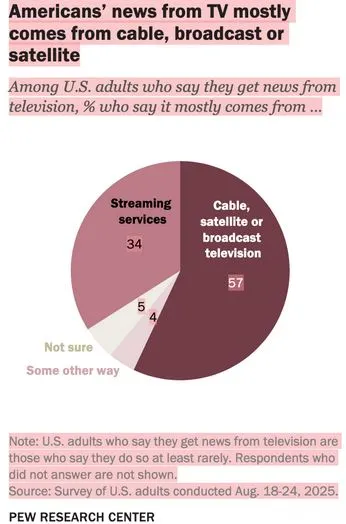 While the media is often painted by the President and his followers as a liberal stronghold, the reality is wealthy connected Republicans control hundreds of local television news stations. Numerous studies have shown local news watchers trust their local newcasts more than national news. They see it as more relevant and less biased. And television is where most get their news, even today. Quoting from a Pew Research Center study of where Americans get their news, “About two-thirds of U.S. adults (64%) now say they get news from television at least sometimes, including 32% who say they do so often.”
Dean E. Nelson, Ph.D., a Professor of Multimedia Journalism at Point Loma Nazarene University, who speaks on journalism ethics here and nationally, reviewed this article and sent the following to me in an email:
While the attempt by Sinclair and Nexstar and others to buy local stations is worrisome to anyone who values having diverse points of view, the reality is that in this country, the news media are first and foremost a business. They are run by the rules of capitalism, and in this case it means it is in the best interest of shareholders and the bottom line to buy up the competition. This is true in the news business as well as any other kind of profit-driven industry. The unfortunate result is that it means there will be fewer voices out there, and these stations will possibly be expected to support a particular ideology, just as the Union-Tribune was expected to behave when it was run by Doug Manchester.
So for a while, there will be fewer diverse voices. But again, because of capitalism, someone will discover that there will be money to be made by providing a product/service/news outlet/ streaming option that represents a different point of view, and something else will emerge. Keep in mind that when stations took down Jimmy Kimmel’s show, enough people complained (which meant that it threatened the bottom line of the stations), that they put the show back on the air. Conservative viewpoints are important, as long as they keep making money. When a money stream constricts, those viewpoints take a back seat.
If people are getting most of their news from television, then they are going to have fewer perspectives as these deals continue to develop. But remember, there was a time in our country when we were getting ALL of our television news from just three stations. Then cable developed, then independent stations developed, then the internet developed. A lot of people will gravitate to where they feel they are being informed. There will always be a market for good, verified information, just as there will be a market for propaganda. We have always had both, and I don’t think this is the end of that reality.
This story was originally published in the OB Rag.
 J.W. August is an award-winning journalist and freelance producer who has served as investigative producer for NBC 7 San Diego and as managing editor and senior investigative producer at ABC 10 San Diego. His in-depth investigations have included a wide range of topics such as rising seas, hate groups, nuclear fuel storage, stem cell clinic claims, dolphin deaths, and massage parlors as fronts for organized crime.
His 40-year career includes many honors, notably 35 Emmy awards from the National Academy of Television Arts and Sciences, the National Press Club award for consumer reporting, the Freedom Foundation award for coverage of hate groups along the border, the National Society of Professional Journalists’ Sunshine Award for fostering open government in San Diego, and the Investigative Reporters and Editors award for outstanding investigative reporting on illegal waste dumping.
August is past president of the Society of Professional Journalists San Diego Chapter, as well as past president of Californians Aware, a public interest group devoted to helping the press and public hold public officials accountable for their actions. He is also an adjunct professor at Point Loma Nazarene University, teaching investigative skills and long-form storytelling to aspiring future journalists.

 Printer-friendly version

 Trump Supporters Will Soon Control Most TV News Stations in San Diego


Comments
RE:Sigh
'Sigh'...
GF