fire-safe building
BETWEEN WILDFIRES: ASK QUESTIONS!
Part 1 of an 8-part Series
By Anne S. Fege, Ph.D., M.B.A., wildfire ecologist/educator and retired Forest Supervisor, Cleveland National Forest
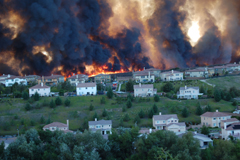
October 13, 2009 (San Diego’s East County)--By any accounts, we will always be “between wildfires” in southern California. That raises three wildfire questions that face San Diego. What will it take to keep houses from igniting? What will happen to nature, with repeated wildfires? What can we do, to live sustainably with wildfires and nature? These questions reflect the paradigm shift that is underway nationally, from wildfire prevention (Smokey, “YOU can prevent fires”) and wildfire suppression, to wildfire property risk reduction (knowing “how houses ignite” and retrofitting structures).

EDITORIAL: GOVERNOR SHOULD SIGN BILL MAKING SURE NEW DEVELOPMENT HAS SUFFICIENT FIRE PROTECTION

By Assemblymember Dave Jones, Candidate, California Insurance Commissioner
More than 2,300 San Diego County structures were destroyed in the Witch, Harris and Poomacha fires. The California Department of Fire and Forestry, (“CalFire”) spent over half a billion dollars on suppression alone that year.
Increasingly, CalFire has been called upon to fight fires that threaten new residential development built in high risk fire areas. And increasingly, new residential subdivisions are being built in high risk fire areas throughout California.
RAMONA FIRE VICTIMS FIND A “VINE” WAY TO BUILD HOME THAT’S FIRE-SAFE & GREEN
By Miriam Raftery
Zak Valade and his wife, Gina, lost their home in the 2007 Witch Creek fire. Now, they’re rebuilding a new home designed by famed architect Drew Hubbell,.constructed of fire-safe and energy efficient materials. They’ve also ripped out their avocado grove and planted a vineyard instead.
“Today, this is the new fire buffer,” Zak Valade says, standing atop the roof of his home under construction in the heart of Ramona’s wine country. He hopes to sell grapes to a local winemaker--and make his new residence both safe and sustainable. “I like port wine; I have a friend who got me into earth building,” he recalls. “He’s a premier grape mixer in our area. I wanted to build out of adobe, but California won’t let you anymore because of seismic requirements.”
Instead, the home’s basic building blocks are PerformWall, a fire-safe product that maximizes design flexibility . “This is post-consumer foam—recycled Styrofoam like TVs are shipped in,” Valade says, hoisting a surprisingly lightweight Perform Wall block over his shoulder. “You mix in potash, Portland cement, and make blocks.”


Recent comments
54 min 29 sec ago
1 hour 4 min ago
1 hour 49 min ago
4 hours 43 min ago
6 hours 15 min ago
10 hours 10 min ago
12 hours 16 min ago
12 hours 29 min ago
14 hours 9 min ago
14 hours 31 min ago