
 Printer-friendly version

 Community Unites to Reimagine Campo’s School Field
By David Shorey, Institute for Public Strategies
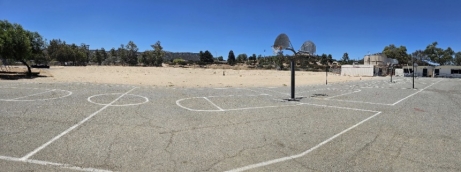
Photo: Campo Elementary field (photo courtesy of Estrada Land Planning)
December 17, 2025 (Campo) -- In the Mountain Empire, where long bus rides, rugged terrain, and rising temperatures shape daily life, a new effort is underway to protect community health and strengthen resilience against extreme heat.
A partnership led by the Mountain Empire Unified School District (MEUSD), Institute for Public Strategies (IPS), San Diego Green Infrastructure Consortium, and Core Clarity is bringing residents together to redesign a 2.34-acre undeveloped field at Campo Elementary School. Today, this is an area where children play without shade, cooling, or protection during increasingly dangerous heatwaves.
Extreme Heat Risks in the Mountain Empire
This project is the first step in what partners hope will become a longer-term effort to address extreme heat across the Mountain Empire Unified School District, particularly in rural communities such as Campo, Potrero, Tecate, Jacumba Hot Springs, Boulevard, and Live Oak Springs.
Although these communities are surrounded by open landscapes, they have some of the lowest tree canopy coverage in San Diego County. In the census tract surrounding the Campo Elementary project site, only 3.37 percent of the land has tree cover. As a result, students and families are highly exposed to heat, sun, and dust, increasing the risk of heat-related illness and limiting safe outdoor activity.
Climate projections highlight the urgency of this work. According to CalAdapt, Campo could experience up to 64 days of extreme heat each year by mid-century, along with a significant increase in warm nights. For a region already facing limited healthcare access, strained infrastructure, and economic challenges, rising temperatures pose serious public health risks, including poorer air quality, impacts on agriculture, and increased wildfire danger.
 Photo, right: satellite photo of Campo Elementary School (photo courtesy of Estrada Land Planning)
Community-Led Planning and Nature-Based Solutions
The planning process places community voices at the center. IPS and MEUSD are hosting listening sessions, stakeholder interviews, and monthly meetings where residents, students, tribal members, and local organizations help shape the future of the field.
Using a Community-Based Participatory Action Research approach, Core Clarity will train local “citizen scientists” to gather data, identify heat-related challenges, and build local expertise. Their lived experience, combined with technical guidance from planners and green infrastructure specialists, will inform a site plan grounded in nature-based solutions.
Potential improvements include shade structures, tree planting, native landscaping, outdoor learning areas, and green-gray hybrid infrastructure that supports both cooling and wildfire preparedness. The redesigned field would provide students with safer, shaded spaces for play and exercise while also serving as a gathering site during community emergencies, a role MEUSD schools have already played during recent wildfire evacuations.
Building a Healthier, More Resilient Backcountry
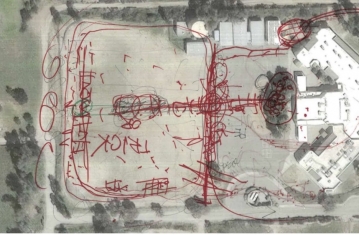 Photo, left: Charette markup of potential improvements of the Campo Elementary field (photo courtesy of Estrada Land Planning)
By the end of the planning process, the community will have a detailed site plan and stronger local capacity to address climate challenges. Residents will gain new tools, technical skills, partnerships, and a stronger civic voice to support future climate adaptation efforts throughout the backcountry.
This initiative is about more than improving a school field. It reflects a community-driven approach to building a healthier, more resilient Mountain Empire, where collaboration, local leadership, and shared solutions help residents meet a changing climate together.
Resources to Utilize
Climate change affects mental health through extreme events like heatwaves, wildfires, and floods, as well as gradual changes such as droughts and increasing temperatures. These conditions can cause anxiety, depression, and post-traumatic stress, which may lead some individuals to turn to alcohol or drugs to cope. Youth, Indigenous communities, and individuals with existing mental health conditions are particularly vulnerable. Extreme heat and disruptions to jobs, housing, and daily routines further heighten stress and the risk of substance abuse.
If you or someone you know is dealing with substance use, emotional distress, or needs someone to talk to, call or text 988 to connect with the San Diego Access & Crisis Line. It’s available 24/7 with free, confidential support in over 150 languages. You can also contact the Access & Crisis Line at (888) 724-7240.
About the Institute for Public Strategies
IPS works alongside communities to build power, challenge systems of inequity, protect health, and improve quality of life. IPS has a vision for safe, secure, vibrant, and healthy communities where everyone can thrive.
 To learn more about IPS, follow them on their social media platforms: Facebook, LinkedIn
Our website is at www.publicstrategies.org.
 David Shorey is Special Projects Manager for the Institute for Public Strategies.





Recent comments