 Printer-friendly version

 Hearing set for Feb. 4 has “dangerous loopholes” that would allow exploitation of exotic animals
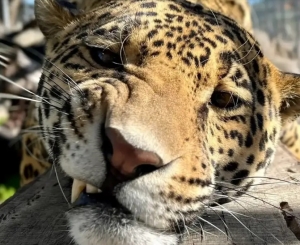
Photo of Eddie the jaguar courtesy Lions, Tigers & Bears
By Karen Pearlman
Jan. 30, 2026 (Alpine) – Bobbi Brink, the founder and director of nonprofit rescue organization Lions Tigers & Bears, can speak with authority on all matters concerning captive exotic animals, including the illegal wildlife trade, animals being used and abused in entertainment, and animal welfare legislation.
Brink is currently urging those who care about the fate of exotic animals to oppose a bill being offered in just a few days in the House of Representatives.
A plan called “Protecting Local Zoos Act of 2026” (H.R. 7159) is headed to be heard at the top government level via a Feb. 4 subcommittee hearing, and if passed, will take hard-won safety measures for animals in a dangerous direction.
Protecting Local Zoos Act will weaken safety laws, create a loophole for “roadside zoos” and commercial dealers to bypass safety regulations, and explicitly remove snow leopards and clouded leopards from prohibited species lists, which could lead to increased private ownership and exploitation.
If the measure passes, Brink said it will open the doors back up to “animals going underground and disappearing.”
“This bill will make the past happen again,” she said.
Brink has testified before Congress and was a key advocate for the passage of the Big Cat Public Safety Act from 2022, which was designed to end private ownership, “cub petting” and roadside exploitation.
The Big Cat Act restricts private ownership and commercial exploitation of big cats in the United States. It prohibits public contact such as “cub petting,” and requires registration of existing privately owned cats. The law aims to enhance public safety and animal welfare, allowing exemptions only for accredited zoos, sanctuaries and universities.
“As a sanctuary that worked tirelessly to help pass the Big Cat Public Safety Act, we know how hard-won those protections were — and why they matter,” Brink said. “That’s why we are deeply concerned about the proposed Protecting Local Zoos Act.”
‘Dangerous loopholes’ will lead to exploitation
The Protecting Local Zoos Act is a bill that will create “dangerous loopholes that allow exploitative facilities to hide behind the label of zoo,’ even if they continue practices like breeding for profit, public contact and using animals for entertainment,” Brink said.
These are the very conditions that lead to abuse, neglect and ultimately rescue, she added
Introduced by Paul Gosar, U.S. Representative for Arizona's 9th Congressional District, Protecting Local Zoos aims to amend the Lacey Act of 1900 to loosen restrictions on certain captive wildlife.
The Lacey Act is a foundational U.S. federal law, last amended in 2008, that prohibits trafficking in illegally taken wildlife, fish and plants. It makes it unlawful to import, export, transport, sell or purchase such items in violation of U.S., tribal or foreign laws, aiming to combat poaching, illegal logging and the introduction of invasive species.
The Protecting Local Zoos Act seeks to expand exemptions for certain facilities, allow for more visitor contact with animals and remove snow leopards and clouded leopards from specific prohibitions.
The key provisions of H.R. 7159 as introduced adds U.S. Department of Agriculture Class B licensees to the list of facilities exempt from certain Big Cat Public Safety Act restrictions.
In the context of the Animal Welfare Act, the USDA uses three main license categories to oversee businesses that handle warm-blooded animals -- excluding farm animals used for food or fiber. Class B are known as the middlemen or brokers, the “resellers” of the animal world, people who buy and sell animals they didn’t breed themselves. (USDA Class A licensees are known as the breeders; Class C are considered entertainers or exhibitors like zoos and petting farms.)
Class B includes brokers, who negotiate sales without owning the animal, and dealers, who take physical possession of the animal before selling it to a third party. These include pet wholesalers, operators of animal auctions, and suppliers who provide animals to research laboratories.
Other key provisions of H.R. 7159 allow trained volunteers, medical professionals and facility staff to have direct contact with animals.
Additionally, the bill clarifies that clouded leopards and snow leopards were “not intended to be included in the restrictions” established by the Captive Wildlife Safety Act, and it allows certain USDA licensees who registered under the Big Cat Public Safety Act to cancel their registration if they qualified for exemptions.
The bill addresses concerns from certain zoo operators regarding the “strictness” of the Big Cat Public Safety Act, which was designed to restrict private ownership and handling of big cats, as described by the Animal Legal Defense Fund. It is part of ongoing discussions regarding animal welfare regulations and the role of smaller, regional zoos and exhibitors.
“Any legislation that weakens enforcement or lowers standards puts animals and communities at risk and reverses critical progress,” Brink said. “At Lions Tigers & Bears, we care for the survivors of these systems. We see the long-term physical and emotional damage caused by weak oversight and profit-driven practices. Protecting animals means strengthening welfare laws — not watering them down.”
How to help protect animals
The Protecting Zoos Act is supported by the Zoological Association of America, which represents certain zoo, aquarium and wildlife facility stakeholders.
It is not supported by the Association of Zoos and Aquariums (AZA), which focuses on higher accreditation standards. Brink said Lions Tigers & Bears is actively seeking AZA accreditation. The organization is already part of the Global Federation of Animal Sanctuaries and the American Sanctuary Association (ASA).
Brink said that the majority of the public doesn't know there is a Species Survival Plan run by AZA. The SSP is a cooperative, expert-managed program among accredited zoos to prevent extinction by ensuring the long-term health and genetic diversity of specific animal populations in human care.
She said that while Lions Tigers & Bears does not breed its animals, and is not a zoo, “we have got to work with AZA” to continue to protect exotic animals.
Brink shared the story about Eddie, a young malnourished jaguar who was “dumped on my road (Martin Way) in the middle of the night,” in a small dog cage back in 2021.
Trafficked as an exotic pet and used for photo opportunities, Eddie has been living his best life at Lions, Tigers & Bears after a federal investigation into his previous life as a “pay for petting” photo op cat.
The investigation uncovered animal traffickers who were later prosecuted for the illegal sale of an endangered species.
To oppose the Protecting Local Zoos Act (H.R. 7159), advocates and animal welfare organizations suggest focusing on the upcoming legislative hearing on Feb. 4.
Brink suggests contacting your representative before the matter is heard to express your concern.
You can use the “House Find Your Representative” tool here to identify your local member of Congress, or you can call or email your representative to urge a “NO” vote, Brink said.



Comments
Mirroring Trump's depicable actions...