
 Printer-friendly version

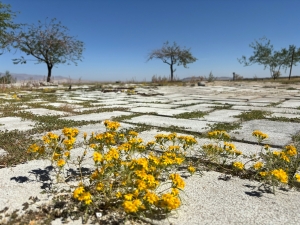 Some native plants have already begun to show up in Glorietta Canyon, like this chinchweed that’s growing on the pad where the previous owner of the property had his trailer. Photo courtesy Anza Borrego Foundation
East County News Service
Nov. 18, 2025 (Borrego Springs) -- A nearly two-decade conservation effort has culminated in a major victory for the Anza-Borrego Desert.
The Anza-Borrego Foundation in late October shared that it has successfully acquired the 40-acre Glorietta Canyon property, a crucial parcel of land on the western edge of Anza-Borrego Desert State Park, securing its protection from future development.
The acquisition marks one of the most significant milestones of the year for ABF and is seen as a long-awaited chance for a damaged, yet cherished, landscape to finally heal.
The fate of the land has been proverbially hanging in the balance. Decades ago, half of the parcel was illegally stripped of its native vegetation, destroying the fragile desert habitat. Now the moment has come that the property will be protected, restored and allowed to recover naturally.
Securing the property does more than add 40 acres to the park, it ensures that wilderness remains connected and free from future development or disturbance.
Glorietta Canyon is a biologically rich gateway to Anza-Borrego State Park, beloved for its late winter/spring wildflower blooms, rock formations, bighorn sheep and other natural wonders.
Lino Morales, land program manager for the Anza Borrego Foundation, called the Glorietta Canyon site" a unique acquisition for ABF."
"Normally we would not acquire a piece of land with human impact like a well or especially the removal of native vegetation but protecting its location from further development and improving access to Glorietta Canyon was very important to the State Park," Morales said. "There are talks underway of different ways to utilize the disturbed areas for the benefit of the Park and public."
A blog post from the ABF said that the property is rooted in the connection of its late landowner, Terry Marsters, to the rugged desert. Marsters, who sought to create a small oasis in the solitude, dug a well, installed irrigation and planted shade-providing trees -- palo verde trees, mesquite trees and more -- that offer sanctuary to birds and desert life.
He kept horses and chickens, devoted to the place he called home. The Anza Borrego Foundation said Marsters' daughter shared that the canyon was where her father wanted to spend his life -- a testament to the profound pull this desert holds for many.
Photo, below, right: Glorietta Canyon, looking north toward the Santa Rosa Mountains. Photo courtesy Anza Borrego Foundation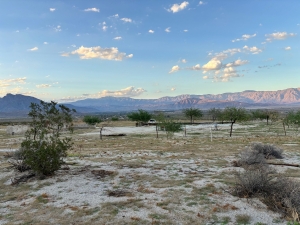
After years of patient negotiations, the land is now in the hands of ABF. While the property still bears the scars of past disturbance, its future is now rooted in stewardship and restoration.
ABF plans to thoughtfully manage the existing disturbed footprint, mitigating human impacts while supporting the natural recovery of native plants and wildlife. Following an initial clean-up by ABF, the focus will now shift to a long-term plan of ecological recovery.
The Anza-Borrego Foundation urges the public to support their mission through donations, shopping, or membership, emphasizing that every effort helps protect the spirit of this extraordinary desert and keep the State Park vibrant and accessible to all.
For more information on the ABF, visit their site here.



Recent comments