 Printer-friendly version

 By Henri Migala
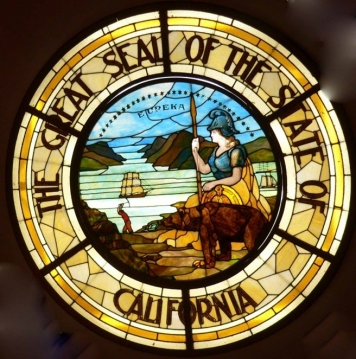
Photo by Miriam Raftery: California state seal at capitol in Sacramento
January 10, 2026 (Sacramento) -- Nearly 800–900 bills were signed into law in 2025 in California spanning workers’ rights, consumer protections, public health, education, housing, tech/AI policy, immigration policy, environmental safety, and more. Below are major statutes that took effect on January 1, 2026, unless otherwise noted.
For details, full legislative texts, and the complete set of laws, refer to official California legislative information (http://www.leginfo.ca.gov/) or the Office of Administrative Law (https://oal.ca.gov/).
CONSUMER PROTECTION & HOUSING
- Plastic Bag Ban (SB 1053): A total ban on all plastic carryout bags at grocery stores and pharmacies, and requires alternative recycled paper or reusable totes.
- Food Delivery Refunds (AB 578): Apps like DoorDash and Uber Eats must provide full refunds to the original payment method for undelivered or incorrect orders. They must also offer access to human customer service.
- Used Car Returns (SB 766): Effective October 1, 2026, buyers have a three-day right to return a used vehicle for a refund and must receive upfront disclosure of all fees.
- Limit on Overdraft Fees (SB 1075): Prohibits credit unions from charging an overdraft fee or a nonsufficient funds fee above $14 or the amount set by the federal Consumer Financial Protection Bureau if it is lower.
- Rental Vehicles (AB 1374): Requires that vehicle rental companies provide a total charges estimate to the consumer, including taxes and fees. Also mandates that the rental company disclose if the vehicle is gas powered or electric.
EDUCATION
- School Phone Policies (AB 3216): By July 1, 2026, public schools must adopt policies to limit or prohibit student phone use during school hours.
- Immigration Enforcement (AB 49): School staff are prohibited from allowing immigration officers onto campus or sharing student records without a judicial warrant or court order.
- Antisemitism coordinator for schools (AB 715): Establishes an Office of Civil Rights to prevent and address discrimination and includes an antisemitism coordinator appointed by the governor.
- Guaranteed Cal State admission (SB 640): The newly created California State University (CSU) Direct Admission Program guarantees admission to 16 of the state's 22 CSU campuses for any student that completes A-G course work and maintains a qualifying grade point average.
- Gender Neutral Bathrooms (SB 760): Requires that all K-12 public schools and charters have at least one all-gender restroom at each school site. The law takes effect in July in time for the 2026-2027 school year. Students cannot be forced to use the all-gender bathrooms.
- Identification Cards (AB 727): Beginning in July, California's public middle schools, high schools and colleges must offer student identification cards with the telephone number and text line of the Trevor Project, a suicide prevention hotline for LGBTQ+ youth.
GUN STORAGE
- Gun Storage (SB 53): Toughens gun laws by requiring firearms stored in the home to be locked up in a safe or other secure device when not immediately being handled. Closes a loophole that allowed unsecured storage if the gun owner did not expect children to be present.
- Converter pistols (AB 1127): Prohibits the sale of Glock handguns that come with a trigger bar which makes it easier to convert them into fully automatic weapons using a simple switch. The law, which takes effect in July, does not affect current owners of Glock pistols.
HOUSING
- Rental Appliances (AB 628): Landlords must provide and maintain a working stove and refrigerator in all rental units for leases signed on or after Jan. 1.
- Tenant Protection (AB 246): Prevents eviction if a tenant is unable to pay the rent because Social Security payments were delayed or terminated by the federal government through no fault of the renter.
- Housing Development (SB 79): Allows the construction of higher density housing within half a mile of high frequency bus lines, rail and subway stations. Residential buildings could go as high as nine stories if they are next to transit hubs. The law, which takes effect in July, only applies to eight counties, including Alameda, Los Angeles, Orange, Sacramento, San Francisco, San Mateo, San Diego and Santa Clara. It overrides local zoning laws that restrict high density housing.
IMMIGRATION
- Legal counsel to immigrant youth (AB 1261): Requires the state to provide legal counsel to immigrant youth in federal or related state immigration proceedings. The law would define immigrant youth as unaccompanied undocumented minors. The state can contract with qualified nonprofit legal services organizations or an office of the public defender to provide this counsel.
- Family Preparedness Act (AB 495): Allows a court to appoint a legal guardian for children if their parents are deported. The law broadens the range of relatives that could be appointed as caregivers to include all adults related by blood or adoption, including great-great aunts or uncles, cousins or stepsiblings. The caregiver designation does not give the person custody and can be cancelled by the parents. The Family Preparedness Act also prohibits child daycare facilities from collecting information about a family's immigration status or citizenship.
- Immigration Enforcement in Schools (AB 49): Prohibits school officials and employees from allowing federal immigration enforcement agents to enter schools without a warrant or court order. SB 98 requires schools to notify students, faculty and community members if federal immigration enforcement officers go into a campus.
- Healthcare Providers (SB 81): Designates a patient's immigration status as protected medical data. It also requires healthcare facilities to designate safe zones not open to the public where access by immigration enforcement agents is restricted.
PETS AND WILDLIFE
- Puppy Mills (AB 506): Requires pet sellers to disclose the health history and origin of dogs, cats and rabbits. Prohibits purchase contracts for pets with non-refundable deposits.
- Cat Declawing Ban (AB 867): Prohibits declawing cats for non-medical reasons.
- Protections for blue whales (AB 14): Aims to help protect blue whales by incentivizing voluntary shipping companies to slow their speeds along the California coast.
- A state snake (SB 765): Establishes the giant garter snake (Thamnophis gigas) as the official state snake.
- A state shrub (AB 581): Establishes the Bigberry manzanita (Arctostaphylos glauca) as the official state shrub.
PUBLIC HEALTH
- Insulin Price Cap (SB 40): Large health insurers must cap out-of-pocket costs for a 30-day supply of insulin at $35. Also, starting on Jan. 1, the state will begin selling insulin under its own label, CalRx. Insulin pens will be available at pharmacies for a recommended price of $11 per pen, or a maximum of $55 for a five-pack.
- Tortilla Fortification (AB 1830): most store-bought corn tortillas and other corn masa products must be fortified with folic acid. The law was passed in 2024 to help prevent neural tube defects like spina bifida. Small businesses that make the products are exempt.
- Supporting families affected by domestic violence (AB 779): In this three-year pilot program, domestic violence consultants will offer guidance to county social workers on how to best support families potentially experiencing both domestic violence and child maltreatment.
- Food allergen notification at restaurants (SB 68): California becomes the first state in the nation to require restaurants to list major food allergens on their menus.
- Infertility and fertility services (SB 729): Mandates that large employer health plans cover infertility diagnosis and treatment, including IVF, for all individuals regardless of marital status, sexual orientation or gender identity and single parents by choice.
PUBLIC SAFETY
- E-Bike Safety (AB 544): E-bike riders must use a rear red light or reflector at all times, not just at night.
- Criminal Penalty for Possessing Burglary-Related Devices (AB 486): Makes it a misdemeanor to possess key-programming or signal-extending devices with intent to commit burglary.
- Work Zone Speed Enforcement Pilot (AB 289): Authorizes pilot programs using radar/laser to detect and cite speeders in highway work zones.
- “Slow Down and Move Over” Expansion (AB 390): Expands the slow-down/move-over law to include highway maintenance and other stationary vehicles with warning devices.
- Speed Limit Reduction Authority (AB 1014): Allows Caltrans to reduce speed limits by 5 mph with a warning citation period for first 30 days.
- Impound Authority for Certain Electric Vehicles (AB 875): Allows impoundment of electric-powered vehicles not meeting lawful definitions or operated illegally; includes conditions for youth e-bike operators.
- License Plate Obscuring Device Ban (AB 1085): Criminalizes use and sale of devices that obscure license plates, with associated fines.
- “No Secret Police Act” (SB 627): Prohibits most federal and local law enforcement from wearing face-concealing masks during operations in California.
- Law Enforcement Badges (SB 805): Requires law enforcement officers in California who are not wearing a uniform to visibly display identification that includes their agency and either name or badge number. The law also makes it a misdemeanor to impersonate a law enforcement officer.
- Penalties for criminals who buy teens for sex (AB 379): Makes it a felony for older adults to buy 16 and 17-year-olds for sex. It also makes it a misdemeanor crime again in California to loiter with the intent to purchase anyone for sex.
- Sexual assault lawsuits (AB 250): Gives adult victims of sexual assault more time to file lawsuits. From Jan. 1, 2026, until Dec. 31, 2027, the law waives statutes of limitations for the lawsuits if the survivors allege a cover-up. Public entities are exempt.
- Parking ticket hardship (AB 1299): Allows agencies to reduce or waive parking penalties if the person can show evidence of an inability to pay it in full because of financial hardship or homelessness. The person could file a request for a payment plan.
- Spousal Rape (SB 258): Eliminates the spousal exception to the definition of rape and makes it a crime to sexually assault a spouse who is unable to consent due to force, a disability or unconsciousness.
TECHNOLOGY & AI
- AI Safety (SB 53): Major AI developers must publicly disclose safety protocols and report critical safety incidents.
- AI Content Labeling (SB 942): Generative AI providers must offer tools for users to check if content was AI-generated and provide an option to add visual labels to such content.
- Chatbot Disclosures (SB 243): Effective July 1, 2026, companies must notify users when they are interacting with an AI chatbot rather than a human and implement protocols to detect and respond to suicidal ideation.
- Deepfake pornography (AB 621): Imposes fines against providers of deepfake pornography.
- Full disclosure by law enforcement (SB 524): Law enforcement agencies will need to identify when artificial intelligence was used in official reports and the type of program they used.
- Limits for ads on streaming platforms (SB 576): Video streaming services cannot make the volume of ads louder than the video that consumers are watching.
WORKPLACE & LABOR
- Minimum Wage Increase (SB 3): The statewide minimum wage rises to $16.90 per hour for all employees. The minimum salary for exempt employees increases to $70,304 annually.
- "Stay-or-Pay" Ban (AB 692): Employers are prohibited from requiring workers to pay back the cost of on-the-job training or other debts if they leave their jobs.
- Pay Transparency (SB 642): Requires employers to publicly post realistic pay ranges in job listings and provide information on CalFresh benefits to employees.
- "Know Your Rights" Notice (SB 294): By February 1, 2026, employers must provide a written notice to each employee explaining their rights regarding workers’ compensation and immigration enforcement.
- Crime Victim Leave (AB 406): Employees can use paid sick leave or unpaid leave to attend judicial proceedings if they or a family member are victims of a crime.
- Layoff notices (SB 617): Requires employers, when ordering mass layoffs, to provide written notice if they plan to coordinate services through a local workforce development board and share information about CalFresh assistance.
- Outdoor dining options (AB 592): Allows restaurants to continue to offer COVID-19-era outdoor dining options.
MISCELLANEOUS
- New State Holiday (AB 268): Diwali, the Hindu festival of lights celebrated by Hindus, Jains, Sikhs, and some Buddhists, is now a recognized state holiday; public schools may close, and state employees can take the day off with pay. Diwali falls on Sunday, Nov. 8 in 2026, meaning the holiday would be observed on the following Monday.
- Book Censorship (AB 1825): The California Freedom to React Act prohibits libraries from banning or restricting access to books and other materials based on their content or the author. The law applies to libraries that receive state funding, including school libraries. Minors cannot be prohibited from checking out books with sexual content that is not obscene in nature.



Comments
E-Bikes...