
 Printer-friendly version

 East County News Service
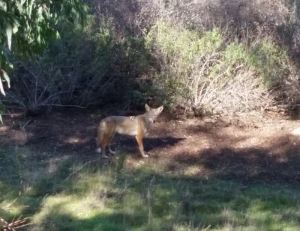
A coyote peers out from near Cowles Mountain in 2023. Photo by Karen Pearlman
Dec. 4, 2025 (San Diego County) -- San Diego County officials are sharing information in response to a recent coyote attack that took place in the Westview UTC mall parking lot on Nov. 25.
The coyote attack injured two children and has prompted a coordinated response by the county and partner agencies to ensure public safety.
The coyote has since been euthanized, county officials say. The animal tested negative for rabies.
While coyote attacks like this are rare, county officials remind people of the importance of preventing coyotes from becoming comfortable around people and knowing how to respond if you encounter one.
The San Diego County Department of Animal Services is sharing some tips to help residents safely coexist with coyotes, and reduce the risk of aggressive behavior on the wild animals' part.
Whilt there are not exact numbers for coyotes in San Diego County, estimates suggest a population in the thousands. The total California coyote population is said to run the gamut and is alwo unknown, but reports have said it could be between 250,000 and 750,000. Coyotes are highly adaptable and can thrive in urban, suburban and wild areas, explaining their large numbers.
County shares how to stay safe if you encounter a coyote
If you encounter a coyote, one effective technique is called “coyote hazing.” Hazing helps reinforce a natural fear of humans and discourages coyotes from returning to populated areas.
If a coyote approaches you, things to do include:
- Stop and yell at it to go away
- Make yourself look big by waving your arms above your head
- Maintain eye contact
- Stomp your feet and make loud noise
- Always keep a safe distance
- Continue all the above until the coyote leaves the area and is out of sight -- if it does not move away, take a few steps forward, stop and repeat the behaviors
If you or someone you know is bitten by a coyote, seek emergency medical care immediately. Rabies post-exposure treatment is not typically available at regular medical offices.
Coyotes often roam into neighborhoods because of things that attract them. This can include leaving pet food or water outside, unsecured trash cans or fallen fruit from trees. Removing these food sources can significantly reduce visits from wildlife, including coyotes.
You can also make your yard less accessible via items like a “coyote roller.” A coyote roller is a humane option that can be installed on top of a fence. When a coyote tries to climb over, the tube spins and prevents the animal from gaining traction.
County Animal Services serves unincorporated areas of San Diego County and provides 24-hour response when animals pose a public safety risk.
Residents who live within an incorporated city should contact their local animal services provider for assistance.
The county will respond when a wild animal poses an immediate threat to people or other animals; if the animal is sick, injured or too young to survive on its own or trapped; if it is rabies vector species such as coyotes, raccoons, skunks, bats or foxes and it has bitten or attacked a person or pet,
While rabies is rare, it is a serious and preventable disease spread through bites, which is why it is important to avoid contact and report aggressive behavior, county officials note.
The County does not respond to reports of wildlife that are simply roaming or creating general nuisances, such as skunks under a porch or opossums accessing pet food.
Protecting pets and safely enjoying public spaces
When visiting parks or preserves with companion animals, always keep your pets on a leash and keep them close to you. If you see a coyote and have a small dog, pick your dog up immediately. Leaving it on the ground can trigger a chase response. Cats should be kept indoors whenever possible.
The California Department of Fish & Wildlife shares that coyotes play an important role in the ecosystem by helping control rodent populations and that learning how to safely coexist is important.
For more information about wildlife safety, visit www.sddac.com or call (619) 767-2675.



Comments
I've seen...