
 Printer-friendly version

 By Paul Levikow
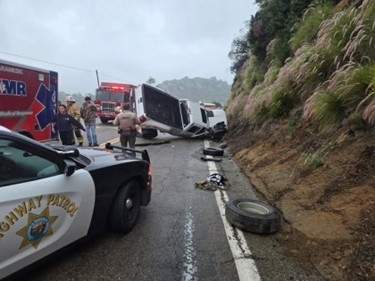
Photo via San Diego Fire Protection District
February 25, 2026 (Crest) – The Crest Dehesa Granite Hills Harbison Canyon Planning Group is seeking public input on the safety of La Cresta Road, following a recent fatal head-on collision in Crest.
Josefina Sanchez, 72, was killed by an alleged drunk driver in the crash Feb. 11, 2026 while visiting her son in Crest. She was in town to mourn the death of her husband who passed away 12 days earlier in Mexico.
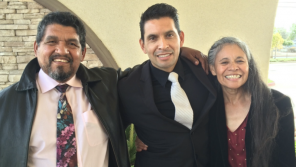 Photo by Roberto Sanchez: his mother, Josefina Sanchez, right, was killed in a head-on crash with a driver allegedly under the influence of alcohol, according to the California Highway Patrol.
“Serious collisions on La Cresta Road are an ongoing concern for residents. This road is a vital connector between the communities of Crest, Dehesa, Harbison Canyon and Granite Hills and the City of El Cajon and Interstate 8, and its safety affects thousands of daily drivers,” Planning Group Chairman Ron Nehring said in a message he posted on the group’s website on the day of the crash.
Public reporting indicates at least five fatalities on this stretch of road in the past decade, including four in the last six years alone, according to the message.
“Between Greenfield Drive and Mountain View Road there are eight blind curves where westbound drivers have limited visibility into oncoming lanes. Long stretches of roadway also lack a shoulder, leaving no room for drivers to avoid a vehicle that crosses the center line. These conditions have raised sustained concerns in the community about roadway safety,” Nehring said.
“Drivers must approach La Cresta Road with heightened caution. The combination of blind curves and narrow margins for recovery means unsafe driving can have immediate and irreversible consequences for residents and other motorists. Treating this road casually puts lives at risk.”
A link has been added to the Planning Group’s website in an effort to help improve safety on La Cresta Road as it works to advise the County of San Diego on practical, targeted steps that could help make the corridor safer. The page is intended to share information, explain the issues, and invite public input to help shape recommendations to the County.
The Planning Group can only advise the County and cannot initiate or compel any action concerning the road. But the Planning Group will provide its recommendations and convey the urgency of making safety improvements with the goal of reducing the number and severity of accidents, according to Nehring.
In addition to online input, the public is also invited to attend the monthly Subregional Planning Group meeting on March 9, 2026, 6:30 p.m. at the Crest Community Association Clubhouse, 113 N. Park Drive, in Crest.
The planning group lists several possible recommendations on the website that work within the existing footprint of the road, since the terrain along La Cresta Road cannot realistically be widened into a standard highway. They include, but are not limited to:
Evaluate and strengthen centerline rumble treatments
If a vehicle drifts toward the center line, rumble strips or rumble striping create vibration and sound that alert the driver immediately. Even where some rumble treatments may already exist, ensuring continuity through blind curves is important. These treatments are widely used to prevent head-on crashes and are one of the most effective ways to warn drivers before they cross into opposing traffic.
Targeted centerline delineators at blind curves
Flexible vertical posts placed at the most dangerous blind curves reinforce the visual boundary between lanes. They discourage centerline encroachment and make it clearer that crossing the line is unsafe. Because they are flexible, they can be struck without major damage while still influencing driver behavior.
High-friction pavement treatment on downhill curves
Special pavement coatings can increase tire grip where braking and steering demands are highest. On a steep descent with blind curves, improved traction reduces skidding and loss of control, especially in wet or dusty conditions.
Stronger curve warning and visibility
Larger curve warning signs, advisory speed signs, reflective markers, and chevron alignment signs can make the roadway path easier to read, especially at night. Clear visual guidance helps unfamiliar drivers react earlier and reduces sudden braking or steering.
Speed feedback or dynamic warning signs
Electronic signs that display a driver’s speed or activate when speeds are too high provide immediate feedback at critical downhill approaches. These signs are intended to reduce unintended speed increases on long descents. These are not speed cameras, only signs which inform a driver of their speed. Signs of this kind are already installed near Dehesa School on Dehesa Road.
Striping improvements and painted buffer zones
High-visibility striping and small painted buffers near the center line can improve lane discipline and nighttime visibility. Even modest visual separation can reduce drift into opposing traffic in constrained corridors.
Strategic lane configuration adjustments
In the most constrained blind curve areas, the County could evaluate whether simplifying lane layout reduces merging and passing conflicts. A more predictable traffic pattern can lower the chance of sudden lane changes where sight distance is limited.
Targeted recovery pull-outs
Where terrain allows, short paved pockets or pull-outs can provide space for distressed vehicles or disabled cars to clear the travel lane. This reduces the risk that a single incident blocks the corridor, which is especially important during an evacuation.
Guardrail upgrades and reflective edge guidance
Modern guardrail treatments and added reflectors can both reduce crash severity and help drivers visually track the roadway edge at night, lowering the chance of roadway departure.
“La Cresta Road is one of the most important transportation corridors serving our neighborhoods,” Nehring said. “It's used daily by residents, visitors, school traffic, and emergency vehicles, and it would be a critical route in any wildfire evacuation.”
Photo by Roberto Sanchez, GoFundMe



Comments
If drivers were...